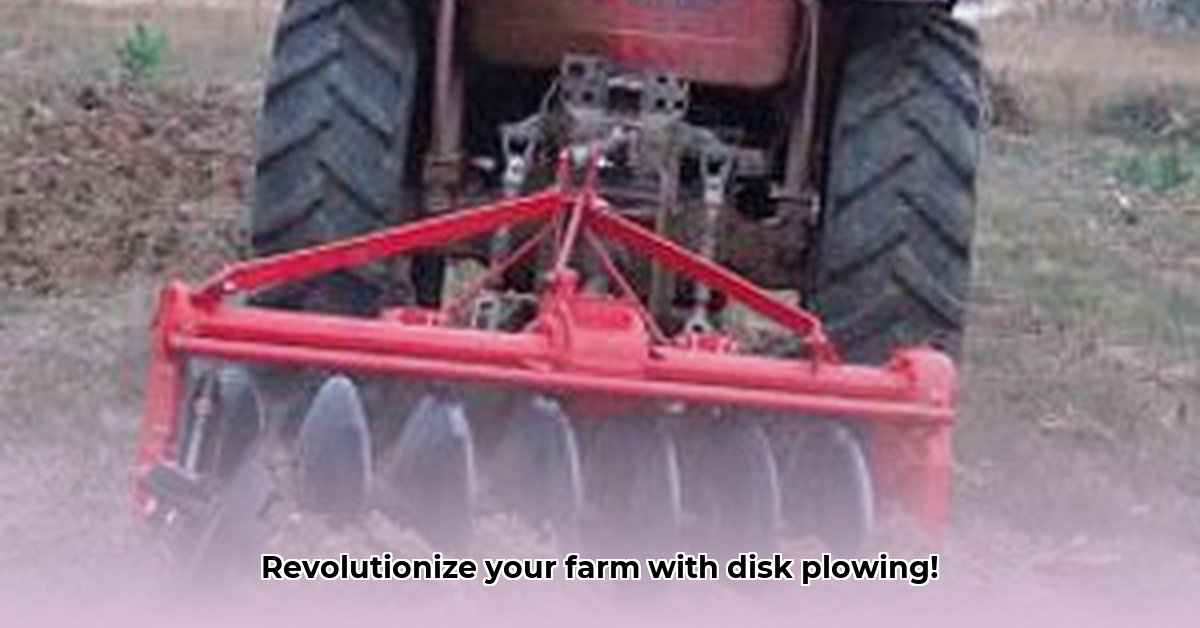
Choosing the right tractor disk plow is a crucial decision for any farmer, significantly impacting soil health, crop yields, and long-term sustainability. This comprehensive guide will equip you with the knowledge to select and utilize a disk plow effectively, maximizing its benefits while minimizing potential negative environmental impacts. For even more information, check out this helpful resource on disk harrows.
Understanding Your Tractor Disk Plow Options
A tractor disk plow's purpose is to prepare the soil for planting. Different types cater to unique agricultural needs and soil conditions. Let's explore the most common options:
One-Way Disc Harrows
Imagine a one-way disc harrow as a straightforward, reliable workhorse. It's excellent for smaller farms or fields with lighter workloads, providing efficient seedbed preparation. Its simplicity translates to ease of operation and maintenance. However, it may not be as effective in tackling heavy crop residue or extremely compacted soil.
Offset Disc Harrows
Offset disc harrows provide more aggressive soil disruption and superior residue management capabilities. Think of them as the muscle cars of the plow world; they are powerful tools ideal for managing heavy crop residue and breaking up compacted soil. Their offset design allows for a more controlled and thorough tilling process, but they demand more operator skill.
Tandem Disc Harrows
Tandem disc harrows are the heavy hitters, perfect for large-scale operations. Their superior depth control and efficient ground coverage make them ideal for large fields requiring thorough tillage. They are highly efficient but require a more substantial investment up-front and a powerful tractor to operate effectively.
Which type is right for you? The best choice depends on the size of your operation, soil type, and the volume of residue you need to manage. Larger farms with heavy soils may benefit from a tandem disk plow, while smaller farms with lighter soils might find a one-way plow perfectly suitable. Careful consideration of these factors is key. Don't you want the most efficient tool for your farm's specific needs?
The Importance of Blade Design and Materials
The blades themselves are the heart of the operation; they're what perform the actual soil manipulation. Their design and material significantly impact performance and durability.
Blade Designs: Serrated vs. Scalloped
Serrated Blades: These offer a sharp, aggressive cut, ideal for tough soils and heavy crop residue. Think of them as a finely sharpened knife, effectively slicing through tough materials. However, this aggressive approach can lead to increased wear and potentially more soil disturbance.
Scalloped Blades: These blades offer a gentler, less-aggressive approach. This is beneficial for lighter soils where minimizing soil disruption is key. They still effectively till the soil but with less disruption, helping to preserve soil structure and minimize erosion. They are the more delicate approach, promoting better soil health.
Blade Materials: Strength and Durability
The material of your blades directly impacts durability and longevity. High-strength materials, such as boron-alloyed steel, significantly increase durability, resulting in a longer lifespan and reduced maintenance costs. Is a longer life span with less maintenance not a compelling benefit?
Optimizing Your Tractor Disk Plow for Sustainable Practices
Sustainable farming hinges on working with nature, not against it. Proper use of a tractor disk plow can be instrumental in achieving this goal.
Residue Management and Soil Health
Properly incorporating crop residue back into the soil is a cornerstone of sustainable agriculture. Your disk plow plays a critical role in this process. By mixing crop residue into the soil, you improve soil structure, enhance beneficial microbial activity, and reduce reliance on synthetic fertilizers. This promotes healthier soil, leading to more robust plants and improved yields.
Avoiding Over-Tillage
While tillage is essential, over-tilling can be detrimental, leading to soil compaction and erosion. The objective is to find a balance: utilizing the plow effectively to achieve your goals without inflicting unnecessary damage. Careful observation and adaptation are key to sustainable tilling practices. Aren't environmentally friendly practices important for maintaining long-term soil fertility?
Selecting the Right Tractor Disk Plow: A Step-by-Step Guide
Choosing the right disk plow is a significant investment. The following steps will guide your decision-making process:
Assess Your Soil Type: Different soil types (clay, sandy, loam) require different tillage approaches. Clay soils, for instance, might need a more aggressive approach than sandy soils.
Define Your Tillage Goals: Are you aiming for seedbed preparation, residue incorporation, or weed control? Clear objectives guide your plow selection.
Establish Your Budget: Disk plows vary widely in cost. Consider both the initial purchase price and potential maintenance costs.
Consider Farm Size and Tractor Capability: Ensure your tractor has the horsepower to operate the chosen plow safely and efficiently.
Research Manufacturers and Reviews: Investigate reputable manufacturers and read reviews from other farmers.
Test Before You Buy (if possible): Trying a model under your specific field conditions is ideal.
Tractor Disk Plow Maintenance and Operation: Ensuring Peak Performance and Safety
Regular maintenance is essential for both the plow's longevity and your safety.
Regular Inspections: Routinely inspect blades for wear and tear. Replace worn or damaged parts promptly.
Correct Depth Settings: Avoid excessively deep tilling; it leads to soil compaction.
Appropriate Operating Speed: Adjust speed according to soil conditions.
Prioritize Safety: Always follow safety guidelines and wear appropriate protective gear.
Conclusion
The right tractor disk plow is a vital investment for any farmer. Careful consideration of plow type, blade design, and operational practices is crucial for both optimizing yields and promoting sustainable farming practices that protect your soil's health for generations to come. Remember that responsible use and regular maintenance are as important as selecting the right equipment.